

Between home and exile
Searching and escaping, with a few pints and words along the way

As I wander through Dublin 2 (each district of Dublin has a number; even numbers are south of the River Liffey, odd numbers are north), it helps that the sights I see remind me of various adventures from the last twenty years; a few pints with some family in that pub in 2007, a crazy night in 2015 at that club, an amazing dinner in 2018 at this restaurant that, sadly, isn’t as good as it used to be. I’ve only been in Ireland for a little under two years at this point but it helps that I have a plethora of memories from the last two decades of visits and excursions to the Emerald Isle. For sure, that helps with adjustment to a new city. It’s a feeling of newness amid the comfort of familiarity.
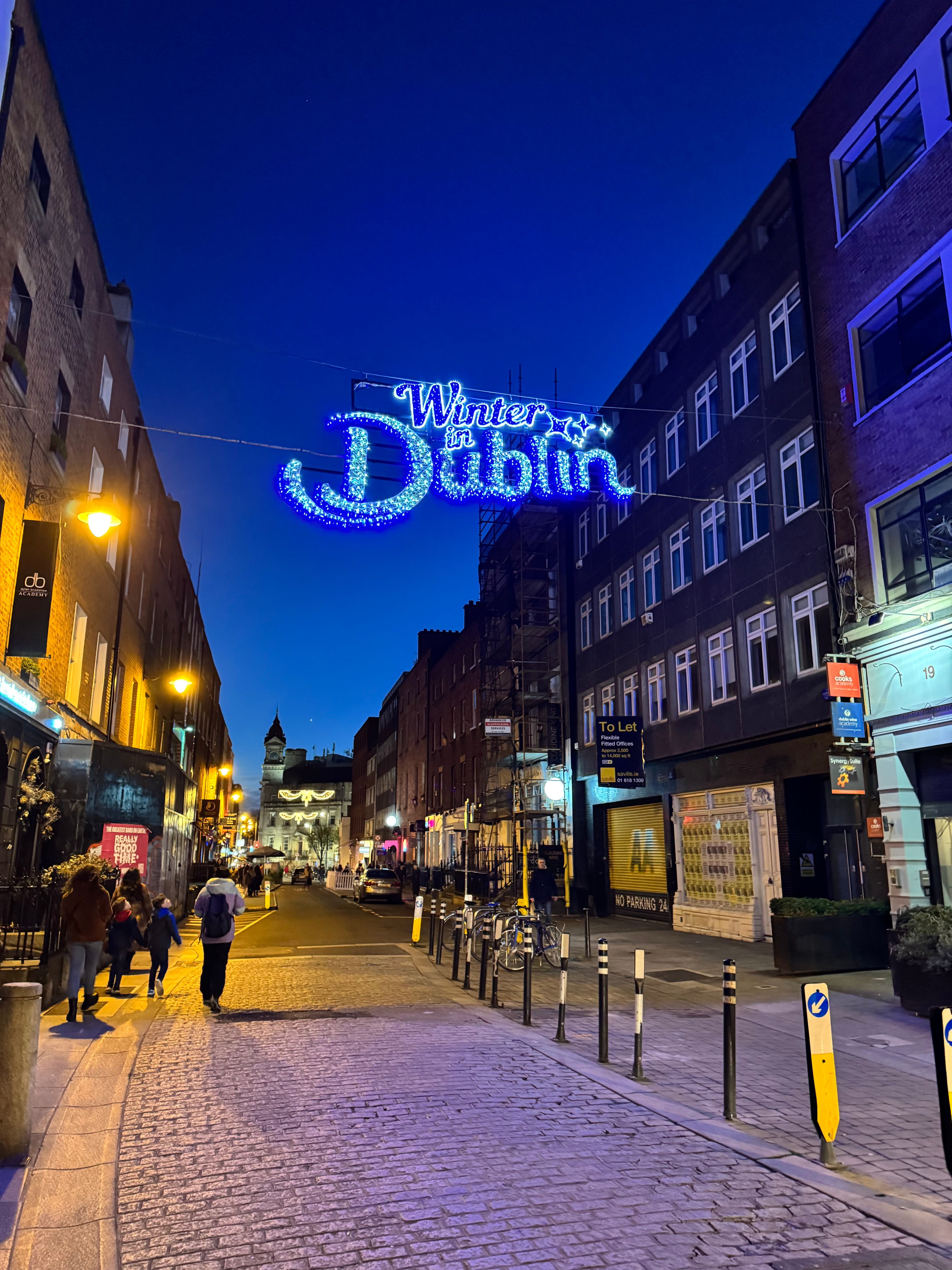
Truth be told, when I would imagine moving to Ireland over the last twenty years, I knew that I’d likely have to live in or around Dublin. I’m not retired (yet) so I’d still need to work and, most likely, the jobs for me would be in Dublin. I fantasized about moving to Ireland. Moving to Dublin, though? Not so much. Is there anything wrong with Dublin? Of course not. But I still maintain that Dublin is still probably my least favorite part of Ireland. Let’s be honest. As a tourist, Dublin isn’t at the top of the list of European capitals. It’s not Rome or Paris or London. There is no Eiffel Tower or Coliseum or Big Ben. There is, however, a large aluminum pole in the city center called “The Spire” that seems to baffle even most Dubliners. Pubs? Of course! People? Absolutely! Some of the best in the world on both accounts. But it’s not a city that is drowning in beautiful sights or typical tourist attractions.
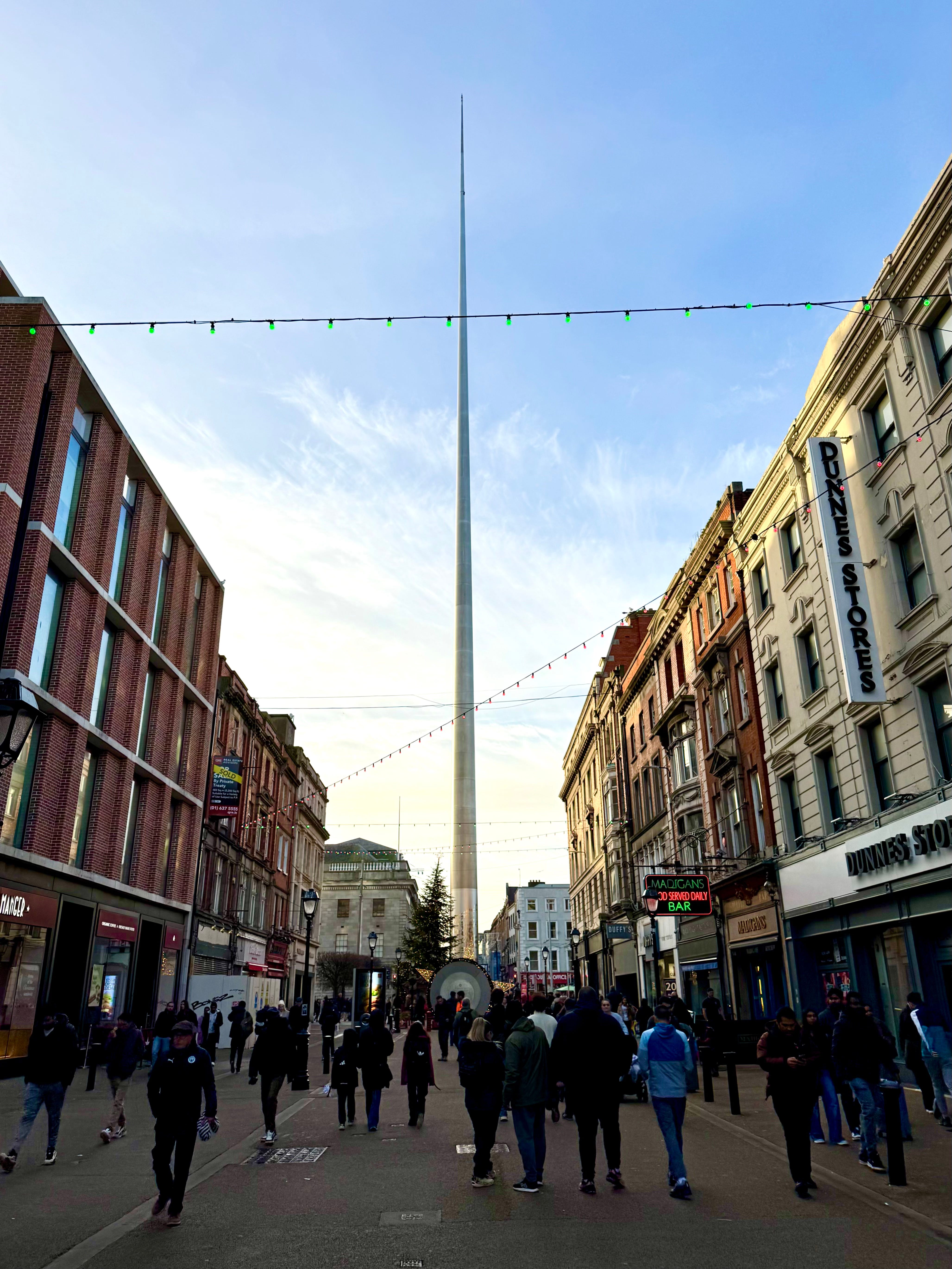
But it’s precisely that unassuming nature that has helped to make Dublin feel much more like home than I imagined it could ever be. There’s a smallness, an almost neighborhood-like quality to the city that is refreshing and welcoming. For the last twenty five years, I’ve lived in Washington, DC, though I am originally from Pittsburgh. Washington, DC, for sure, has more attractions than Pittsburgh. But what makes Dublin feel like a “hometown” is exactly what made Pittsburgh more of a “hometown” than Washington. Ask anyone living in DC. They probably aren’t from there and likely won’t remain forever. In twenty-five years of living in DC, I met one person “from” there. It’s a great city but it’s a transient city, almost by definition.
So what does it mean to be “at home”? Is it just a place where your family and all your stuff is? Does it mean walking into local shops and pubs where everyone knows your name (cue Cheers theme song)? Is it a place where memories inhabit places on a map? Does it mean having regular coffee with neighbors? Or is it, like love, something that you can’t put into words but know when you feel it?
Conversely, what does it mean to be “in exile”? The word conjures up images of medieval criminals being banished to distant lands never to return. Or more recently, the word may make us think of refugees carrying everything on their backs to move somewhere they’ve never seen, never intended to go, and did not choose to go in order to save the one thing that might be more precious than “home” - their lives. The great Palestinian writer, Edward Said, said this about exile:
“Exile is strangely compelling to think about but terrible to experience. It is the unhealable rift forced between a human being and a native place, between the self and its true home: its essential sadness can never be surmounted. And while it is true that literature and history contain heroic, romantic, glorious, even triumphant episodes in an exile’s life, these are no more than efforts meant to overcome the crippling sorrow of estrangement. The achievements of exile are permanently undermined by the loss of something left behind for ever.” [1]
Am I at home? Or am I in exile? In reality, I am neither. Ireland feels more like home every day and I am positive it will continue to be so. I am also not in true exile. Yes, there is a sorrow in the estrangement I feel toward my home country. But I moved by choice and conviction, not necessity. Some of the closest people in my life are genuinely exiled from their native land, so I certainly do not intend to draw parallels between my voluntary escape and their survival.
In the same essay, though, Said goes on to describe the most famous Irish exile, James Joyce. One cannot Google “Irish and exile” without coming across his writing. (It also helps that I have been a rabid fan of Joyce’s writing since my second trip to Ireland in 2013, when I finally finished Ulysses for the first time after many abandoned efforts.) He says:
“James Joyce chose to be in exile: to give force to his artistic vocation. In an uncannily effective way – as Richard Ellmann has shown in his biography – Joyce picked a quarrel with Ireland and kept it alive so as to sustain the strictest opposition to what was familiar. Ellmann says that ‘whenever his relations with his native land were in danger of improving, [Joyce] was to find a new incident to solidify his intransigence and to reaffirm the Tightness of his voluntary absence.’ Joyce’s fiction concerns what in a letter he once described as the state of being ‘alone and friendless’. And although it is rare to pick banishment as a way of life, Joyce perfectly understood its trials.” [1]
This certainly resonates with me. I’ve had no trouble “solidifying my intransigence” or “reaffirming the tightness of my voluntary absence” in the short two years since I arrived here. Just watch the news. Joyce escaped Ireland to focus on his art outside of the “oppressive” atmosphere of Catholic (and British-occupied) Ireland. On the other hand, I’ve come to Ireland to focus on my own life and that of my family. To turn the page, so to speak, on many simultaneous journeys. Distance sometimes clarifies who we are.
That is where I am. Somewhere between home and exile, running further from the latter and constantly searching for the former. I’ll be writing about it along the way.
(The well-read reader might also have noticed the allusion to Dostoevsky’s Notes From Underground in the title of this site, as well. That is, perhaps, the subject of another essay.)
References:
[1]: https://granta.com/reflections-on-exile/